
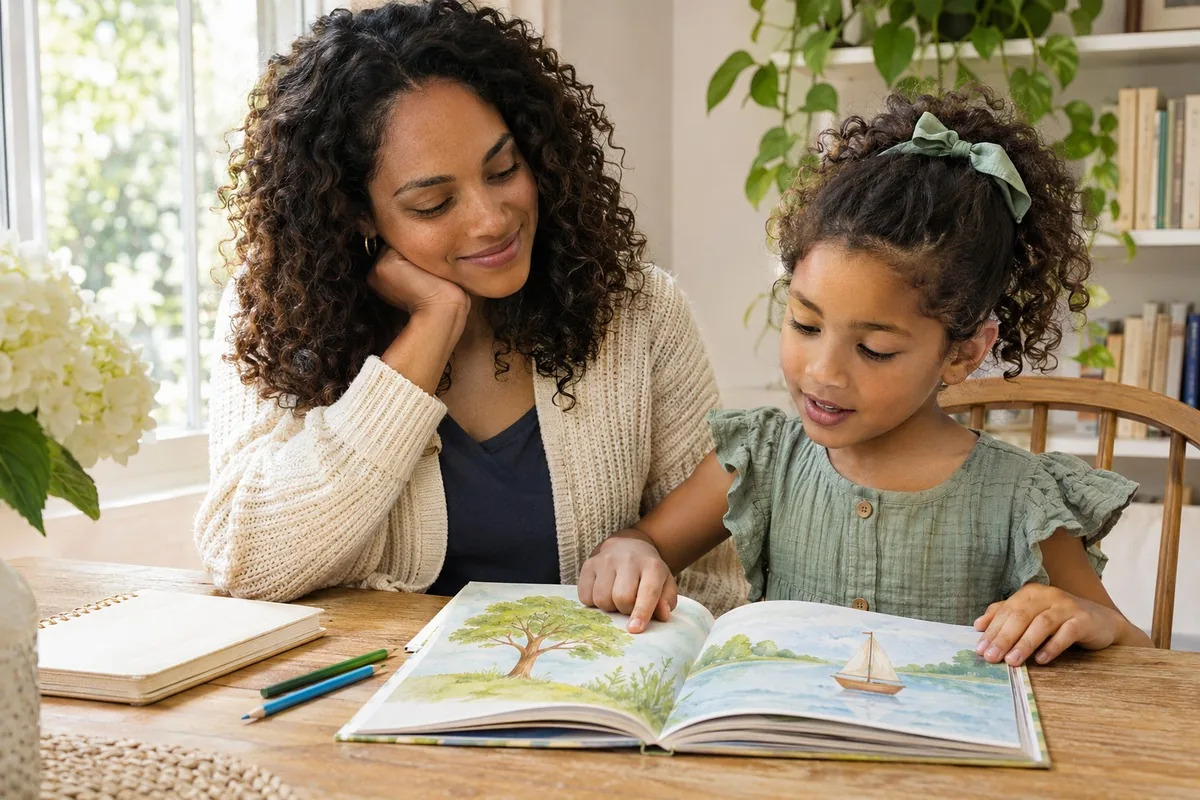
Writing devotionals for children starts with understanding the moments that fill a child’s day. A new classroom, an argument over a toy, or a mistake during a game can bring feelings that are difficult to explain. A short devotional can give a child and caregiver a way to talk, read Scripture, and pray together.
For authors and ministries, the task is to connect a clear biblical idea with an experience a child can recognize. The language, illustration, and question at the end should all serve the same reading moment.
Decide who will read the book aloud
Choose an age range and a reading setting before drafting. A devotional for a five-year-old listening beside a parent will sound different from one a ten-year-old reads independently.
For a first project, consider a clearly defined audience such as children ages five to eight reading with an adult. Use that choice to guide vocabulary, sentence length, and the amount of explanation you include.
As a starting point, try a 150-250-word story or reflection, followed by a short prayer and a conversation question. Read the whole entry aloud and adjust it to the attention and understanding of your intended readers. The target is a working choice for your book, rather than a rule for every children’s devotional.
Begin with a moment a child recognizes
Choose a situation with a small, concrete action. A child stands at the classroom door. Two friends want the same swing. A drawing tears just before it is time to show the family.
Let the reader notice what the character does. They may hide the paper, grip a backpack strap, or stop speaking. These details open a conversation without requiring a long explanation of an emotion.
Give each entry one focus. A story about being afraid of a new room does not also need to teach sharing, honesty, and responsibility. Keeping the focus clear helps the child remember the reading.
Keep the Scripture connection faithful
Read the biblical passage in its wider context before adapting its message for young readers. Explain unfamiliar words and keep invented scenes separate from events described in the Bible.
For example, Psalm 56:1-4 includes a prayer of trust amid fear. A devotion can invite a child to bring fear to God while helping them name it to a trusted adult.
For Bible retellings, our guide to writing Bible stories children truly love explores how to preserve the passage’s meaning while making the story accessible.
Make room for the feeling before teaching the response
A child who feels angry or frightened needs language for that experience. Let your characters say what is happening, and show an adult listening before offering a lesson.
Give the child an action they can understand: asking for help, taking a turn, apologizing for a hurtful choice, or telling a caregiver what happened. Keep the distinction between feelings and actions clear. A character can feel angry and still need help choosing what to do next.
Avoid making every difficult emotion disappear at the end. A child can finish a reading feeling heard and knowing who can help, even while the situation remains unfamiliar.
Try a short story followed by conversation
The following original, fictional example is written for an adult to read with a child ages five to eight.
The new room
Read together: Psalm 56:3.
Maya stopped outside the classroom. Inside, children were talking around a table of bright blocks. She held her backpack strap tighter.
“I don’t know where to sit,” she whispered.
Dad bent down beside her. “A new room can feel scary. Let’s tell your teacher what you need.”
Maya took his hand. Her tummy still felt wobbly when they walked inside, but now the teacher knew she needed help finding a place.
Psalm 56:3 says, “What time I am afraid, I will trust in thee” (KJV). We can tell God when we feel afraid. We can also tell a trusted grown-up and ask for help with the next small step.
Talk together: Who could you ask for help when a place feels new?
Pray together: God, you know when I feel scared. Help me tell someone I trust and take my next step with you. Amen.
Let the pictures carry part of the story
Plan the text and illustrations together. In Maya’s story, the picture could show her hand gripping the backpack and the busy classroom beyond the doorway. Those details help the reader notice her uncertainty.
An illustration note can identify the emotional purpose of the scene and any essential action. Give the artist room to decide how to show it. Keep important text away from a character’s face or a busy part of the background.
For a series of daily readings, choose a visual rhythm that families can recognize. A consistent place for the passage, story, and question helps adults find each part while reading aloud.
Ask questions children can answer in their own words
Try questions such as “What do you think Maya wanted to say?” or “Who helps you when you feel unsure?” Give the child time to answer, and allow an answer that surprises you.
Optional activities can extend the conversation. A child might draw a place where they feel welcome or practice asking an adult for help. Choose an activity that fits the message and uses materials a family is likely to have.
A short caregiver note can explain the passage’s context or suggest a listening question. It should support the shared reading without turning it into a lesson plan that is difficult to use.
Test the reading with children and caregivers
With appropriate permission, ask a few families from your intended audience to try sample entries. Notice where a word needs explaining, where attention drifts, and what the child remembers afterward.
Invite adults to comment on how naturally the questions open conversation. Review the manuscript for assumptions about family structure, ability, and church experience. A theological reader can check the biblical explanations, while an editor can help with clarity and consistency across the collection.
If you are preparing a complete book, the Christian self-publishing roadmap explains the next decisions in editing, design, and proofing.
Create your children’s devotional with Christ Writes
Christ Writes supports Christian authors and ministries with children’s writing, editing, illustration, and publishing. Tell us about your children’s devotional idea, including the age range, the themes you want to explore, and how families will use the book.
A little guidance. A meaningful book.
Tell us where you are in your writing journey. We’ll help you find your next step.
Start a conversation ↗